
|
People searching for a Southern Appalachian mountain trip often end up choosing between North Georgia and the Blue Ridge Parkway, and it is a fair comparison since both sit in the same mountain range and both are famous for fall color, waterfalls, and scenic overlooks. They are not the same trip, though. Here is how they actually differ. |
||||||||||||||||||
Sponsor This Guide Put your Georgia business in front of travelers using this guide to plan their trip. See our advertising options or download the 2026 media kit (PDF). |
||||||||||||||||||
|
||||||||||||||||||
What Makes North Georgia Different |
||||||||||||||||||

North Georgia is not one road, it is a whole region you build your own route through. Scenic byways like the Russell-Brasstown Scenic Byway and the Cohutta-Chattahoochee Scenic Byway connect to state parks, waterfall trails, and small towns like Helen and Blue Ridge, so you can build a trip that mixes driving with real hiking and waterfall stops. It is also much closer to Atlanta, which makes it realistic as a single day trip or an easy weekend without committing several vacation days to travel time. The tradeoff is that you have to plan your own route rather than just following one road sign to the next overlook. See our Best Waterfalls in North Georgia and Best Fall Foliage Drives guides for specific North Georgia routes. |
||||||||||||||||||
What Makes the Blue Ridge Parkway Different |
||||||||||||||||||
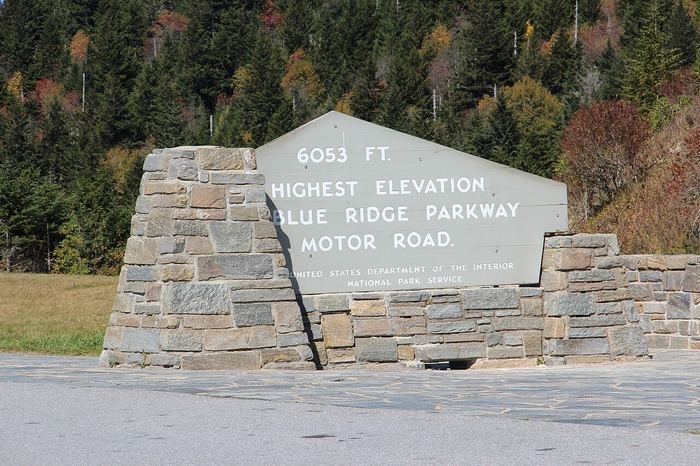
The Blue Ridge Parkway is a single, continuous 469-mile National Park Service road running from Shenandoah National Park in Virginia to Great Smoky Mountains National Park in North Carolina. It was built in stages between 1935 and 1987 specifically as a scenic drive, with no commercial traffic and a low speed limit throughout, so every mile is designed around the view rather than getting somewhere fast. That makes it an outstanding road trip if you have several days to give it, but it is a real commitment to drive end to end, and the closest sections sit three to four hours from Atlanta in western North Carolina. Most Georgia-based visitors treat it as its own separate trip rather than a day trip add-on. |
||||||||||||||||||
Which Should You Actually Choose? |
||||||||||||||||||
|
If you have a day or a weekend and live anywhere near Atlanta, choose North Georgia. You can hike a waterfall, drive a scenic byway, and be home the same night if needed, and there is enough packed into a small area that you will not run out of things to do. If you have several days set aside specifically for a scenic mountain drive and do not mind the extra travel time, the Blue Ridge Parkway is worth the trip on its own, especially in October when the whole route lights up with fall color. Plenty of people do both, treating North Georgia as the closer, more frequent trip and the Parkway as the bigger annual one. For more North Georgia trip ideas, see our 3-Day North Georgia Mountains Itinerary or browse every Georgia scenic driving tour we cover. |
||||||||||||||||||
|
Blue Ridge Parkway photo: Richland Balsam Overlook, courtesy of Thomson200 via Wikimedia Commons, released under CC0 1.0 Public Domain Dedication. |
||||||||||||||||||
Common Questions
How far is the Blue Ridge Parkway from North Georgia?
The Parkway’s southern end is at Cherokee, North Carolina, roughly 3 to 4 hours from Atlanta by car. Most North Georgia mountain trailheads are 1 to 2 hours from the city.
Is North Georgia part of the Blue Ridge Mountains?
Yes. North Georgia’s mountains are the southern end of the same Blue Ridge range the Parkway follows through North Carolina and Virginia, though the Parkway itself does not enter Georgia.
How long is the Blue Ridge Parkway?
The Blue Ridge Parkway is 469 miles long, connecting Shenandoah National Park in Virginia to Great Smoky Mountains National Park in North Carolina. It was built in stages between 1935 and 1987.