
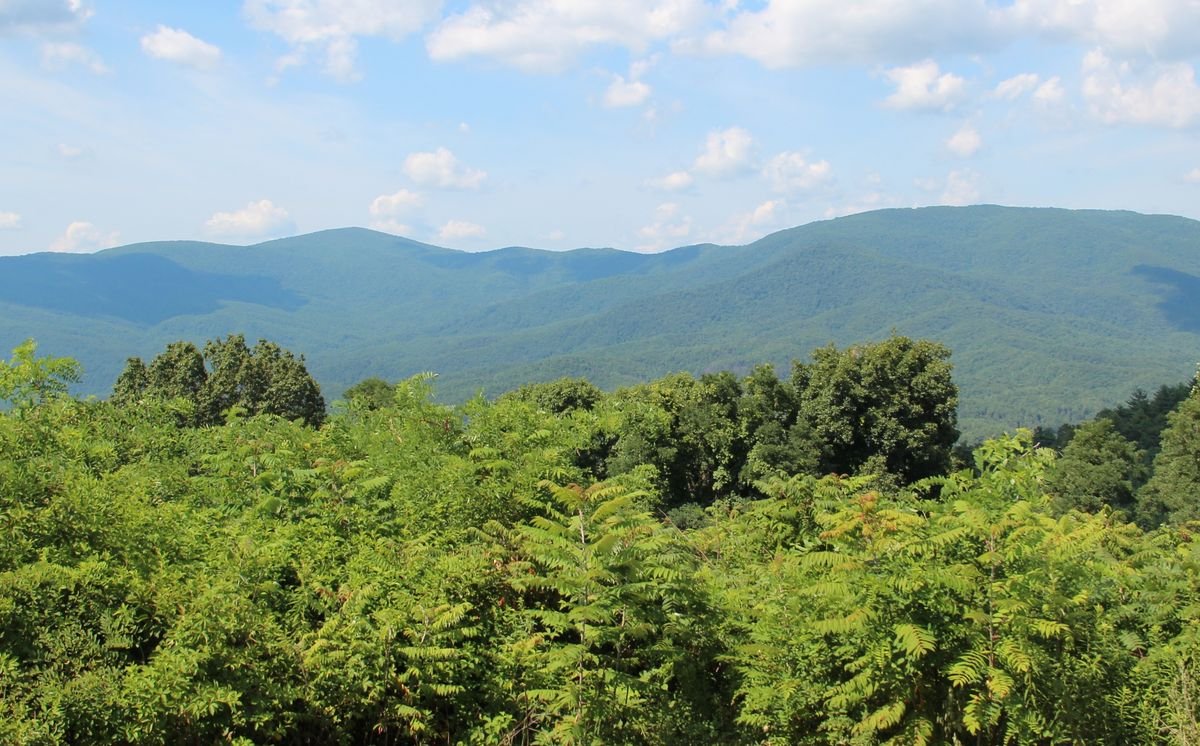
Photo: Thomson200, public domain, via Wikimedia Commons
Yes, you can camp for free in Georgia. The biggest free option is dispersed camping on the Chattahoochee-Oconee National Forest, which covers much of the North Georgia mountains and a large tract near Lake Oconee. You can also stay at Appalachian Trail shelters and at designated sites on many state Wildlife Management Areas, though WMAs require a license or pass. Below is where free camping is allowed, the rules that apply, and how to do it safely. We checked the rules on October 15, 2026, against the Forest Service and Georgia DNR.
- Best free optionDispersed camping on the Chattahoochee-Oconee National Forest
- Stay limit14 days on national forest land, then a 30-day wait before setting up again
- FacilitiesNone: no water, toilets or trash pickup. Pack it in, pack it out
- Not freeGeorgia State Parks campsites and most developed Forest Service campgrounds
- National Forest
- Appalachian Trail
- Wildlife Management Areas
- Safety Tips
- Cheap Campgrounds
- Common Questions
Dispersed Camping on the Chattahoochee-Oconee National Forest
The Forest Service allows dispersed, or primitive, camping in most places within the Chattahoochee-Oconee National Forest boundary, at no charge and with no permit for ordinary camping. The Chattahoochee covers the North Georgia mountains from the Cohutta Wilderness east to the Chattooga River, and the Oconee section lies between Madison, Greensboro and Eatonton.
The rules
Dispersed camping outside developed campgrounds is limited to 14 days, and you may not re-establish a campsite on national forest land for 30 days after that. Sites are open year-round unless a closure order is posted. Leave no trace, pack out everything you bring in, and never leave a campfire unattended.
Where to look
Most dispersed sites are existing clearings with a fire ring along gravel Forest Service roads. The Conasauga Ranger District has a designated area, the Ball Field Dispersed Camping Area. Use sites that are already there instead of clearing new ones, and stay off private inholdings.
Wilderness areas
Primitive camping is allowed in wildernesses such as the Brasstown, Tray Mountain, Raven Cliffs and Rich Mountain, but the Forest Service discourages camping right beside streams and in dense vegetation. Some wildernesses limit party size or close areas to camping, so check with the ranger district first.
Ranger districts
Call the district for current closures: Blue Ridge (Blairsville) 706-745-6928, Conasauga (Chatsworth) 706-695-6736, Chattooga River (Lakemont) 706-754-6221 and Oconee (Eatonton) 706-485-7110. See our U.S. Forest camping guide for developed campgrounds.
Appalachian Trail Shelters
The Appalachian Trail runs nearly 80 miles through Georgia from Springer Mountain to the North Carolina line, with three-sided shelters along the way that are free and first-come, first-served. They are meant for hikers on the trail, so plan to walk in. Expect crowds in March and April, when northbound thru-hikers start at Springer, and bring a tent as backup. From March 1 to June 1 each year, a Forest Service rule requires an approved bear-resistant canister for overnight camping on the roughly 5-mile stretch between Jarrard Gap and Neel Gap near Blood Mountain, including its shelters.
Sponsor This Guide
Run an outfitter, gear shop or campground in Georgia? Put it in front of campers planning their trip. See our advertising options or download the 2026 media kit (PDF).
Camping on Wildlife Management Areas
Many of Georgia DNR’s Wildlife Management Areas allow primitive camping, but only at designated sites, and it is not completely free. Anyone using a WMA needs a Georgia hunting or fishing license or a Lands Pass. The general rules:
- Camp only in designated campsites or camping areas; some WMAs, such as Treat Mountain, do not allow camping at all.
- Campsites are limited to 14 consecutive days, followed by a vacancy of at least 7 days, and you may not set up again on the same WMA or within 1 mile during that time.
- Some WMAs need a camping permit. At Dawson Forest, for example, campers must carry a permit and camp only in designated areas on set dates.
- Some DNR campgrounds charge fees and take reservations through GoOutdoorsGeorgia.
- WMAs are hunting lands. During deer season, wear blaze orange and check each area’s hunt dates in our Georgia hunting guide and Georgia deer season dates.
Every WMA posts its own rules at trailheads and check stations. Our individual WMA guides, such as Chattahoochee WMA, Coopers Creek WMA and Warwoman WMA, link to DNR’s current page for each area.
Free Camping Safety Tips
Bears: Black bears live throughout the North Georgia mountains. Store all food, trash and toiletries in a vehicle, a bear canister or a proper hang, and never feed wildlife.
Water: Dispersed sites have no drinking water. Bring your own or treat creek water.
Fire: Check for burn bans and Forest Service fire restrictions before you go, keep fires small and in existing rings, and drown them completely before leaving.
Roads: Gravel Forest Service roads can wash out after storms. A high-clearance vehicle helps, and cell service is unreliable, so download maps before you lose signal.
Cheap Campgrounds When You Want a Restroom
Developed Forest Service campgrounds cost far less than private campgrounds. For example, The Pocket near Lafayette charges $15 a night in season. Georgia State Parks campsites cost more, but they come with showers, and our best Georgia state parks for camping guide compares them. For mountain trip planning, see 20 best things to do in North Georgia.
Common Questions
Is free camping allowed in Georgia?
Yes. The Chattahoochee-Oconee National Forest allows free dispersed camping in most places within the forest boundary, Appalachian Trail shelters are free and first-come, first-served, and many state Wildlife Management Areas allow camping at designated sites for people with a Georgia hunting or fishing license or a Lands Pass.
Can you camp anywhere in the Chattahoochee National Forest?
Dispersed camping is allowed in most places in the Chattahoochee-Oconee National Forest unless a closure order is posted, but not on private land inside the forest boundary. The stay limit is 14 days, after which you may not re-establish a campsite on national forest land for 30 days.
How long can you dispersed camp in Georgia?
On the Chattahoochee-Oconee National Forest, dispersed camping is limited to 14 days, followed by 30 days before you can set up camp on national forest land again. On Georgia WMAs, campsites are limited to 14 consecutive days, followed by a vacancy of at least 7 days.
Do you need a permit to camp on a Georgia WMA?
You need a Georgia hunting or fishing license or a Lands Pass to use a WMA, and you must camp only at designated sites. Some WMAs, such as Dawson Forest, also require a camping permit, and some do not allow camping at all, so check the WMA's own rules first.
Sources we checked
Camping rules were checked on October 15, 2026. Closure orders and WMA rules can change, so check with the ranger district or WMA before you go:
- U.S. Forest Service, Chattahoochee-Oconee National Forests: dispersed camping rules, stay limits and wilderness camping
- Georgia DNR hunting regulations: WMA camping rules and stay limits
- Georgia DNR Wildlife Resources Division: WMA access requirements and camping permits
- Appalachian Trail Conservancy: Georgia shelters and bear canister requirement
Spot something out of date? Email Contact@n-georgia.com and we’ll check it against the official source. Read how we research our guides.