|
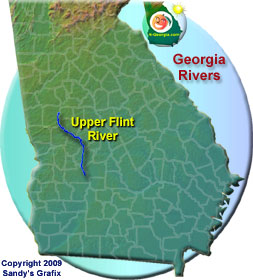
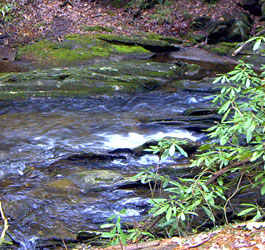
Characteristics of the Flint River make it suitable for canoe and kayak float trips. |
| Best Fishing Bets |
| Shoal bass, redbreast sunfish, channel catfish and flathead catfish |
| Upper Flint River Fishing Tips |
Shoal Bass are considered the signature species of the river and current size structure of the population indicates good fishing for the next couple of years. Fish in the 11 to 15-inch range are most abundant, but larger fish in the 14 to 20-inch range are common. Always be prepared for the occasional 18 to 22-inch fish. Best fishing for shoal bass is in May and June and again from September through November.
Technique - Preferred spinning gear is light to medium and a variety of lures are effective. Try small swimming minnows, spinner baits, top water poppers and Texas-rigged worms and lizards. When fly-fishing, wade the shoals with a 6-8 weight bass or trout rod and plenty of wooly buggers and poppers.
Target the Piedmont section from Joe Kurz WMA to around Highway 128. Named for their preferred habitat, shoal bass are found in a number of notable fishing shoals, including Waddell, Dripping Rock, Goat Mountain, Pasley, Sprewell Bluff, Owens, Yellow Jacket, Hightower, Daniels and Snipes. Shoal bass are found in the Coastal Plain below Hwy 128 as well, and in this area they prefer swifter water near the banks, typically around larger snags. |
|
Spotted Bass were introduced into the upper Flint several years ago and have now colonized the entire Piedmont section. Average size is slightly smaller than shoal bass.
Technique - Spots are aggressive and readily strike most lures used for largemouth bass and shoal bass.
Target - Look for spots in the Piedmont section, from above Joe Kurz WMA downriver to at least Hwy 128. They are found in a wider range of habitats than shoal bass and largemouth bass, but are most abundant in moderate currents, on the edges of shoals and around snags. |
Bream - Redbreast sunfish are another angler favorite. The Flint is known for its hand-sized redbreast and expect 30 percent of catches to be in the 6 to 7-inch class. Since river flows have recently returned to near normal levels, fishing is expected to be good for the next couple of years.
Technique - Redbreast are great sport on ultra light gear. Favorite lures are very small spinners such as roostertails, small curly-tail grubs with spinners, beetle spins and the smallest of crankbaits. Crickets are a traditional favorite and rarely fail to produce. For fly-fishing, small poppers and wet flies that resemble spiders or caterpillars are recommended.
Target - Redbreast are equally abundant in Piedmont and Coastal Plain regions. Look for redbreast around shoals and along the banks near snags in moderate current. During the spring spawning season they bed in slack current in sandy areas along the banks. |
|
Channel and flathead catfish are numerous in both the Piedmont and Coastal Plain sections of the upper Flint River. Expect the occasional 40-plus pound flathead, so come prepared with stout gear.
Technique - Set hooks, trotlines and rod and reel are all effective. For channel cats, use earthworms, prepared baits, liver, catalpa worms and crayfish. For flatheads, live bait is a must - try bream, large minnows, shad or smaller catfish
Target channel cats in deep areas around shoals and in river bends, particularly near snags. Flatheads are abundant in the Piedmont section but are generally smaller than in the Coastal Plain areas below Highway 128. Look for deeper river bends around snags and bring your patience since flatheads seem to feed aggressively only at certain times of the day. |
Other fish species also common in both Piedmont and Coastal Plain sections are largemouth bass, bluegill, redear sunfish and crappie.
Technique - A boat is required. The best method is to drift fish in slack water areas and cast or fish live bait in and around snags. Tactics and gear are similar to those used for these species in lakes and ponds.
Target - Find these species in slack water areas around cover, rather than the shoals, which are favored by shoal bass and redbreast sunfish. |
|
| Contact Info |
| Wildlife Resources Division, Fort Valley Fisheries office - Phone: 478-825-6151 |
|
|
|
Visit:

 Georgia Lakes Georgia Lakes
WMA Public Fishing Areas
GA Fishing Lakes
Georgia Rivers & Map
GA Lakes & Rivers Map
Water Safety
|