|
See several beautiful gardens including the International Garden, Native Flora Garden, Shade Garden, Heritage Garden and Flower Garden. |
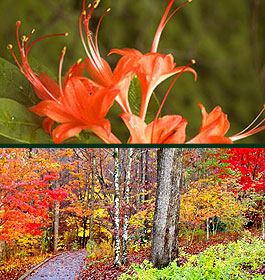 Also see the lovely Day Chapel and the headquarters of the Garden Club of Georgia. Gift shop, gallery, and Café Trumps at the Garden. Also see the lovely Day Chapel and the headquarters of the Garden Club of Georgia. Gift shop, gallery, and Café Trumps at the Garden.
The Garden is located approximately 3 miles south of the University campus. It encompasses over 300 acres, much of which borders the Middle Oconee River, containing speciality gardens, special collections, and a tropical conservatory, featuring a broad array of native and exotic plants. More than five miles of nature trails traverse the natural areas of the Garden.
Handicap Accessibility: The State Botanical Garden makes every effort to ensure the accessibility of all programs and buildings. Most gardens and collections and all facilities are handicap accessible, however, the nature of the facility prevents portions of the trails and natural areas from being completely accessible to all visitors. Walking, wheelchair or electric scooter are the primary ways in which to experience the Visitor Center & Conservatory and nearby gardens.
Amenities: Restrooms, Accessibility for mobility-impaired, Food, Party Facilities.
Free admission and parking.
Open 7 days a week from 8am until 6pm. |
|
The International Garden is located adjacent to Visitor Center. It portrays the inter-relationship between people and plants within context of historical eras that have influenced the evolution of botanical gardens. 11 botanical and horticultural collections depict the geographic origin of plants, plant hunters who sought them, and the forces that drove the plant hunters.
 Over the millennia plants, like people, have literally traveled around the world, affecting history, politics, culture, art and religion. The International Garden, located adjacent the Visitor Center, portrays the interrelationship between people and plants within the context of three eras that have significantly influenced the evolution of botanical gardens—the Middle Ages, the Age of Exploration and the Age of Conservation. Over the millennia plants, like people, have literally traveled around the world, affecting history, politics, culture, art and religion. The International Garden, located adjacent the Visitor Center, portrays the interrelationship between people and plants within the context of three eras that have significantly influenced the evolution of botanical gardens—the Middle Ages, the Age of Exploration and the Age of Conservation.
The Herb Garden contains collections of herbs used for culinary, dye, fragrance, and ceremonial purposes; medicinal herbs are displayed in the Physic Garden reminiscent of a 17th century knot garden. These two gardens represent the Middle Ages. Early physic gardens, then associated with medical schools, led to the development of botanical gardens.
The Age of Exploration is represented by the Mediterranean & Middle East, Spanish America, American South, and China sections. This era saw active exploration of the planet in search of new and valuable plants—and a proliferation of botanical gardens to contain and study them.
The Age of Conservation, a subject of great concern today, is explored in the Threatened & Endangered Plants section and the Bog Garden. The American Indian Plants section features plants used by Indians of the southeast U.S. whose conservation practices provide excellent models even today. |
|
The visual axis of the garden is provided by a stream originating from a wall fountain at the rear of the Visitor Center. Water flows along a stream through a series of pools, under the flower bridge, and into a larger pool where it is filtered and recirculated.
The International Garden pays homage to three plant hunters whose work has had significant influence in the American South—John and William Bartram who discovered the now famous Franklinia (named in honor of Benjamin Franklin) and Ernest Henry "Chinese" Wilson whose Oriental introductions have proven well adapted to the Southeast.
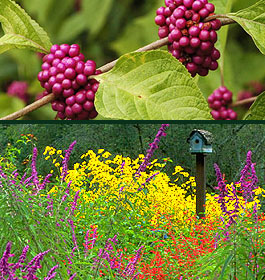 Panoramic views are possible from several locations, notably the pavilion, overlook trellis, cafe, and the flower bridge. Panoramic views are possible from several locations, notably the pavilion, overlook trellis, cafe, and the flower bridge.
The Native Flora Garden features more than 300 species native to Georgia, which claims some of the most diverse flora in the U.S. Many of the species found here are woodland species, some rare, threatened or endangered. The garden was established in honor of Linton Reese Dunson Sr., a conservation agronomist.
Georgia's flora is among the most diverse of any state in the U.S. Ferns, trilliums, bloodroot, and lady slipper orchids are among the more than 300 species found in the Native Flora Garden. The garden was established in honor of Linton Reese Dunson Sr., a conservation agronomist.
Many of the species found here are woodland species, some rare, threatened or endangered. Other rare, threatened, and endangered species can be found in the Bog Garden and Threatened and Endangered Plants section of the International Garden.
Georgia and the southeastern U.S. were a mecca for European plant hunters in the 17th, 18th, and 19th centuries. Tradescant, Clayton, Catesby, Michaux and others botanized throughout the area, sending hundreds of new species back to European gardens. In 1765, John and William Bartram discovered (near present day Darien) the famous Franklinia, now extinct in the wild. On a later expedition, William Bartram traveled through or near land now comprising the State Botanical Garden. |
| |
The Shade Garden contains a wide variety of shade-tolerant plant species, most colorful in spring when the dogwoods and azaleas are in flower but interesting year-round. Shade gardens are particularly popular in the South where they offer respite from hot summer sun and temperatures.
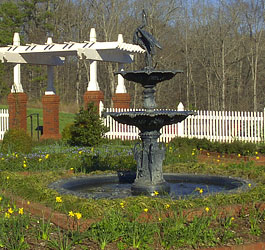 The Shade Garden contains a wide variety of shade-tolerant plant species. The garden is divided into seven sections named in honor of the seven districts of The Garden Club of Georgia: Laurel, Azalea, Oleander, Camellia, Magnolia, Dogwood and Redbud. With the exception of Oleander, the seven sections feature plant collections reflective of the district names. Because oleanders are not reliably hardy in Athens Georgia and do not flower well in shade, this section contains a collection of viburnums. The Shade Garden contains a wide variety of shade-tolerant plant species. The garden is divided into seven sections named in honor of the seven districts of The Garden Club of Georgia: Laurel, Azalea, Oleander, Camellia, Magnolia, Dogwood and Redbud. With the exception of Oleander, the seven sections feature plant collections reflective of the district names. Because oleanders are not reliably hardy in Athens Georgia and do not flower well in shade, this section contains a collection of viburnums.
Prominent architectural features of the Shade Garden are the wisteria covered arbor situated on the Azalea District Plaza and the Mathis Plaza with pool and sculpture, La Grazia Dello Stelo (The Graceful Stem) by Athens Georgia sculptor John Kehoe. The Mathis Plaza honors the first president of the Friends of the Garden, William Mathis.
The Shade Garden is most colorful in spring when the dogwoods and azaleas are in flower but is interesting year-round. Shade gardens are particularly popular in the South where they offer respite from hot summer sun and temperatures. Gently sloping walkways and handrails make the Shade Garden easily accessible to people with disabilities. |
|
The Heritage Garden features plants of historic and socioeconomic interest to Georgia, including ornamentals, fruit crops, row crops, and plants native to Georgia, and also pays homage to milestone events and key people in Georgia's agrarian history.
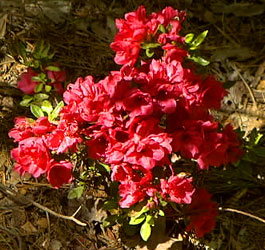 The Heritage Garden contains plants of historic and socioeconomic interest to Georgia. Included in this garden are ornamentals such as heirloom annuals and perennials and antique roses; fruit crops such as apples, pears, and peaches; row crops such as cotton, tobacco, and peanuts; and a selection of plants native to Georgia. The Heritage Garden contains plants of historic and socioeconomic interest to Georgia. Included in this garden are ornamentals such as heirloom annuals and perennials and antique roses; fruit crops such as apples, pears, and peaches; row crops such as cotton, tobacco, and peanuts; and a selection of plants native to Georgia.
The garden also pays homage to milestone events and key people in Georgia's agrarian history. The Trustees Terrace, for example, provides a reflection on the Trustees Garden which James Oglethorpe developed in Savannah shortly after the arrival of the English colonists. Other milestone events included development of the commercial peach industry in late 19th Century and commercial pecan industry in the early 20th Century as well as attempts at sericulture (silk production) during the 18th and 19th Centuries.
Also included among the components of the Heritage Garden are sections that pay homage to P. J. Berckmans and Fruitland Nursery. Immigrating from Belgium in the mid 19th Century, Berckmans developed and released hundreds of new varieties at his nursery in Augusta. The nursery became one of the largest in the U.S. by end of the century and is now the site of Augusta National Golf Club.
These and other interesting botanical and horticultural events are portrayed in the Heritage Garden which lies just uphill from the International Garden separated by Freedom Plaza. |
|
The Flower Garden will contain a wide variety of ornamental plants including daylilies, irises, dahlias, poenies, perennials, and bulbs. This garden will also contain a large perennial boarder, fragrance garden, rose garden, butterfly garden, and adjacent wild flower meadows.
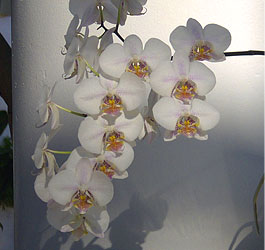 The Flower Garden. The Flower Garden will bring together in one central location several smaller gardens currently devoted to herbaceous flowering plants, and will provide opportunities to build on and expand the study and display of important cultivated genera and species. The Flower Garden. The Flower Garden will bring together in one central location several smaller gardens currently devoted to herbaceous flowering plants, and will provide opportunities to build on and expand the study and display of important cultivated genera and species.
The Rose Garden, Dahlia Garden and Annual & Perennial Garden are among the existing gardens that will be relocated to the new Flower Garden. Additional major collections will include daffodils, daylilies, irises, peonies, bulbs, wildflowers, cut flower species, species grown for fragrance, and species grown to attract butterflies, birds, and other fauna.
While designed with aesthetic appeal in mind, this garden will also support formal and informal learning for both students and the general public as they see, compare and contrast the diversity of species and cultivars that comprise our modern plant pallets. Plazas, sculpture, architectural features and a wildlife viewing pavilion are also included in the design.
The Flower Garden will be located adjacent the Heritage Garden, just downhill from the Garden Club of Georgia state headquarters building. Cascading down the hillside toward the Middle Oconee River, it will provide an attractive and convenient pedestrian linkage between the Day Chapel, Heritage Garden and nearby Visitor Center. |
| Garden Etiquette |
Enjoy yourself. Dress appropriately for the outdoors, wear closed-toe shoes, and bring insect repellent, sunscreen, and water.
Be respectful. Stay on paths and avoid flower beds. Do not pick leaves or flowers from plants. Keep voices low to experience the sounds of the Garden. |
| Contact, Address, Gardens Map and Website |
Phone: 706-542-1244 - Address: International Garden Lawn, 2450 S. Milledge Ave., Athens Georgia 30605 - Located 1 mile past Athens bypass (Loop 10) -  State Botanical Gardens Website State Botanical Gardens Website |
|
|
|

Check these out :
GA Gardens
Garden Types
State Botanical Garden Special Collections &
Nature Trails

Print a Travel Region Map
Historic Heartland Fun:
Festivals & Events
Free Indoor Activities
Free Outdoor Activities
Tourist Centers
Travel Region Info
|