|
| Best Fishing Bets |
| Redear Sunfish, Redbreast Sunfish, Bluegill, Catfish and Largemouth Bass |
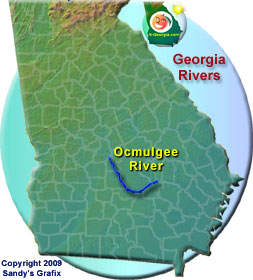
| Lower Ocmulgee River Fishing Tips |
Bream - Bluegill, redear sunfish and redbreast sunfish all are present in the lower section of the river. Expect bluegill and redbreast catches to be slightly below average this year, while the redear sunfish population is slightly above average. Expect redear catches between 9 and 12 inches and 1-2 pounds.
Technique - For bluegill: Popular baits include crickets and catalpa worms fished near the bottom below a light cork. For redbreast sunfish: Fishing crickets or worms are most popular. Try fishing your bait suspended below a float just above the bottom or straight-lined on the bottom. For redear sunfish: Favorite baits are red wigglers or crickets fished near the bottom under a cork.
Target - When targeting bluegill try pitching bait around cover along the shoreline of oxbow lakes, sloughs, slack-water areas or eddy pockets. Target redbreast in flowing water around structure along creek and river channels. Also try the head and tail ends of sandbars. In late summer, target redear sunfish around woody debris and overhanging vines along the riverbank. During fall, try fishing around flooded grasses and vegetation near mouths of oxbow lakes and creeks. |
|
Largemouth Bass - Expect bass catches slightly below average, with most averaging 12-16 inches, but be prepared for the occassional lunker in the 7 to 10-pound range.
Technique - Crankbaits, spinnerbiats, plastic worms and lizards are popular lures.
Target oxbow lakes and slack-water areas containing overhanging willows and woody structure, especially during spring. In the summer, try fishing eddy pockets, the downstream end of sandbars and heavy cover along the banks. |
Catfish - Expect good numbers of channel and flathead catfish catches this year. Most channel cats will average 1/2 to 2 1/2 pounds. Good numbers of 4 to 10-pound flatheads are present, and anglers are encouraged to harvest catches of flatheads. Late winter to late summer is considered the best time to target flatheads.
Technique - Utilize heavy-duty sporting tackle on limb or trotlines. Live baits work best; try fishing shiners, bream or Louisiana pinks.
Target - For flatheads, target areas around snags in the deep holes along outside bends of the river channel during the day. |
|
| Contact Info |
| Wildlife Resources Division, Bowen’s Mill Fisheries office - Phone: 229-426-5272 |
|
|
|
Check These Out:

 Georgia Lakes Georgia Lakes
WMA Public Fishing Areas
Georgia Fishing Lakes
Georgia Rivers & Map
GA Lakes & Rivers Map
Water Safety
Fishing Checklist
|