
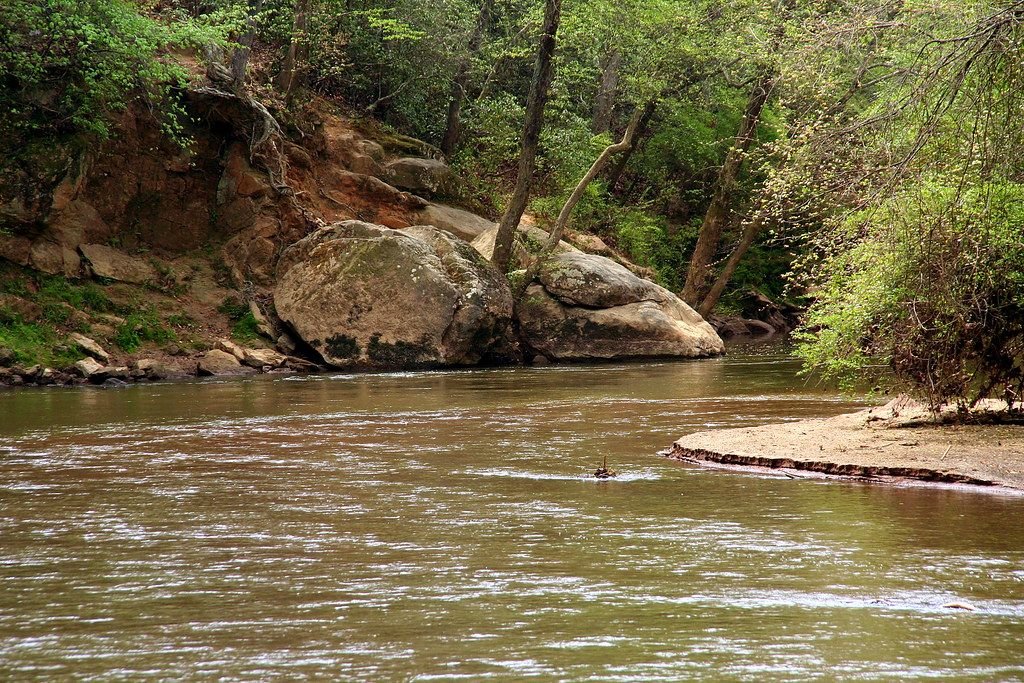
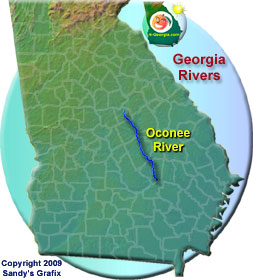
The Oconee River is formed just south of Athens where the North Oconee and Middle Oconee rivers meet. From there it flows south about 220 miles, through Lake Oconee and Lake Sinclair and past Milledgeville and Dublin, until it joins the Ocmulgee River to form the Altamaha.
Above the lakes, the river runs over bedrock outcrops and gravel with stable, tree-lined banks. Below Lake Sinclair it changes from rocky shoals near Dublin to cutaway sand banks, fallen timber and a sandy, silty bottom on the way to the Altamaha. It is a quiet river for bank fishing, johnboats and kayaks, with bream, catfish and largemouth bass as the best bets.
- LengthAbout 265 miles
- Best betsBream, catfish, largemouth bass
- AlsoWhite bass, crappie, bowfin, Altamaha bass
- Ideal gage2 to 6 feet (USGS)
Low water caution: When the river is low, Georgia DNR advises boaters to run at slow speeds. Rocks and other hazards may sit just under the surface.
Oconee River Fishing Tips
These prospects come from Georgia DNR Wildlife Resources Division fisheries biologists, based on their sampling on the river.
Black Bass
Prospect: Largemouth and Altamaha bass are both here, with the occasional spotted bass and maybe a shoal bass. The lower river holds good numbers of largemouth, especially around Dublin. Most bass run under 14 inches, but 20-inch-plus fish turn up, and the river record largemouth, caught in 2017, weighed 10 pounds, 3.2 ounces.
Technique: Classic largemouth baits are a chartreuse and white Snagless Sally, plastic jerkbaits, spinnerbaits or a pig and jig. Small soft plastics, big spinners and shallow-diving crankbaits work for all the bass species.
Target: Look for Altamaha bass in swifter water with bedrock outcrops. For largemouth, fish shoreline blowdowns with moderate current, then work into slack water with good cover.
White Bass
Prospect: March and April are the months, when white bass make spawning runs up the Oconee and Apalachee rivers.
Technique: Little Georges, Rooster Tails, small lipless crankbaits, 2-inch curly tail grubs in white, green, yellow or chartreuse, in-line spinners, and live minnows or small shad.
Target: Sandbars and deep river bends, but the prime spots are below Barnett Shoals Dam south of Athens and in creek mouths between the dam and Lake Oconee.
Catfish
Prospect: Expect plenty of smaller channel and white catfish. Flathead numbers seem to have leveled off, while blue catfish keep spreading, and the river record blue has fallen twice lately: a 50-pound, 6.4-ounce fish in April 2024, then a 62-pound, 15.2-ounce blue caught by the first angler’s brother in January 2025. DNR asks anglers to keep every blue and flathead catfish they catch to protect the river’s native sunfish.
Technique: Live shad or bluegill and cut bait are best for flatheads, on hot summer nights. Blues take live or cut bait on the bottom. Worms, dead shrimp and cut bait on the bottom work for channel and white catfish.
Target: In summer, early morning and night fishing are best for all catfish. Their steady bite makes them a great fish for introducing kids to fishing.
Bream
Prospect: DNR’s 2025 fall sampling on the lower river found good numbers of bluegill, redear sunfish (shellcracker), redbreast, longear, spotted sunfish (stumpknocker) and warmouth, including very good numbers of big redear. The river record redear, caught in 2022, weighed 1 pound, 13 ounces. Introduced yellow perch are showing up too, and DNR encourages anglers to keep them.
Technique: On the lower river, fish catalpa worms or crickets close to cover with a split shot and float; big redear and bluegill often hold in flooded willows. Red wigglers on the bottom, or small Rooster Tails, Beetle Spins and Satilla Spins on ultralight tackle, also work. Fly anglers can wade the shoals with a 3- to 5-weight rod and a small popper, or try a hopper-dropper rig in summer.
Target: On the upper Oconee, fish the bedrock shoals. On the lower river, try creek mouths and deep eddy pools next to swift current, close to structure.
Crappie
Prospect: DNR found good numbers of keeper-size crappie in its 2025 fall sampling. February through April brings the most and biggest fish. A new river record black crappie, 1 pound, 11.6 ounces, was caught in December 2024.
Technique: Small live minnows or jigs in blue and black, blue and chartreuse, white, green or yellow, with or without a bobber.
Target: Crappie stack up below Barnett Shoals Dam in early February. On the lower Oconee, fish woody cover in slack water near creek mouths and creek arms. When the water reaches the low 60s, work shallow cover for spawning fish; the bigger females usually hold in the deeper water nearby. In fall, crappie gather at the mouths of oxbow lakes.
Bowfin
The Oconee holds some big bowfin. The river record, 7 pounds, 6 ounces, was caught in July 2023, and biologists have sampled 10- to 12-pound fish, so that record could fall.
Photos
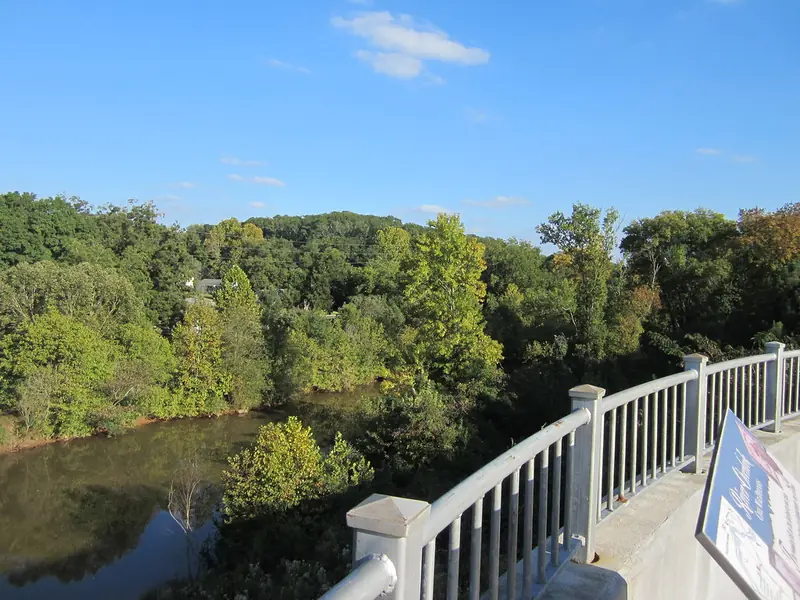 North Oconee RiverOverlook in downtown Athens
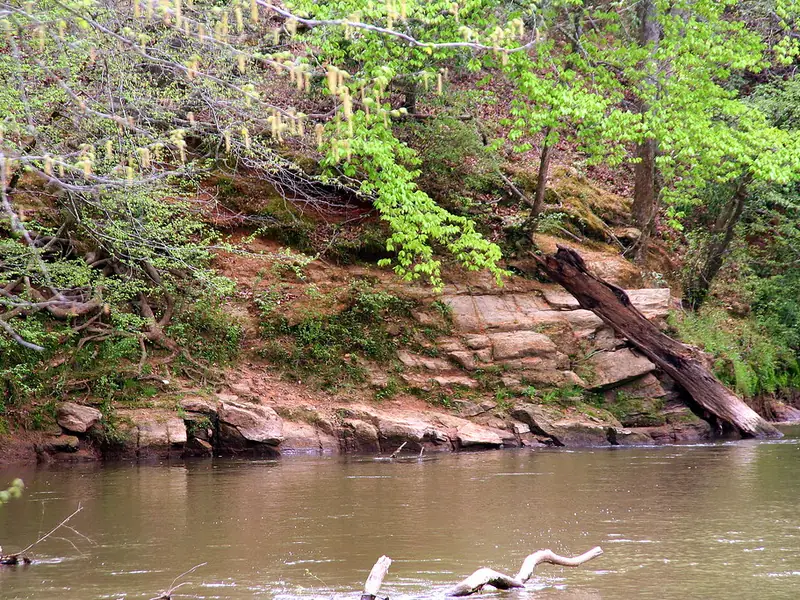 Middle Oconee RiverRed clay banks near Athens
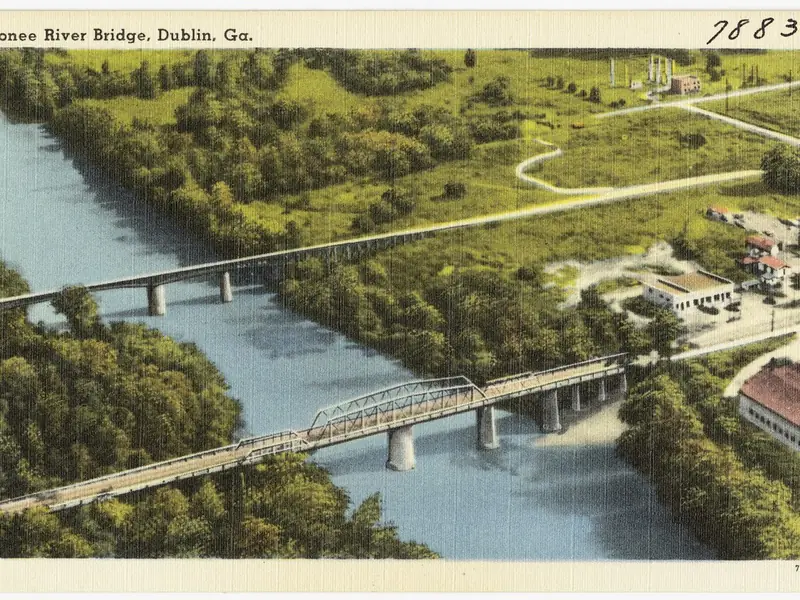 Oconee River BridgeDublin, mid-1900s postcard
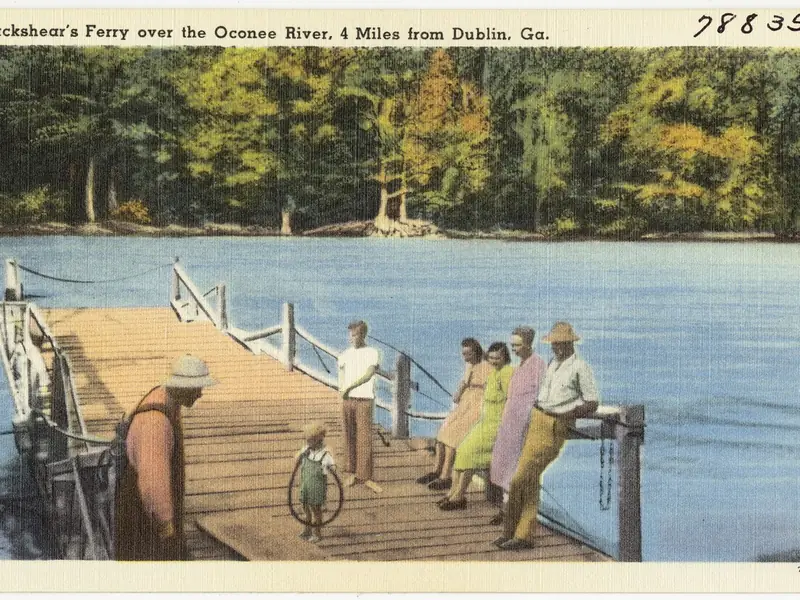 Blackshear’s FerryFour miles from Dublin, vintage postcard
Photos via Flickr and Wikimedia Commons: nshivar, CC BY 2.0; Ezra S F, CC BY 2.0; Boston Public Library, public domain; Boston Public Library, public domain.
Before You Go
River Levels
A USGS river gage height of 2 to 6 feet is ideal for fishing. Below that, the river is hard to navigate; above it, there is usually too much water to fish well.
Nearby
Lake Oconee fishing, Lake Sinclair fishing, Oconee River Campground and the Altamaha River.
Contact
Georgia DNR Wildlife Resources Division fisheries office: 478-825-6151.