
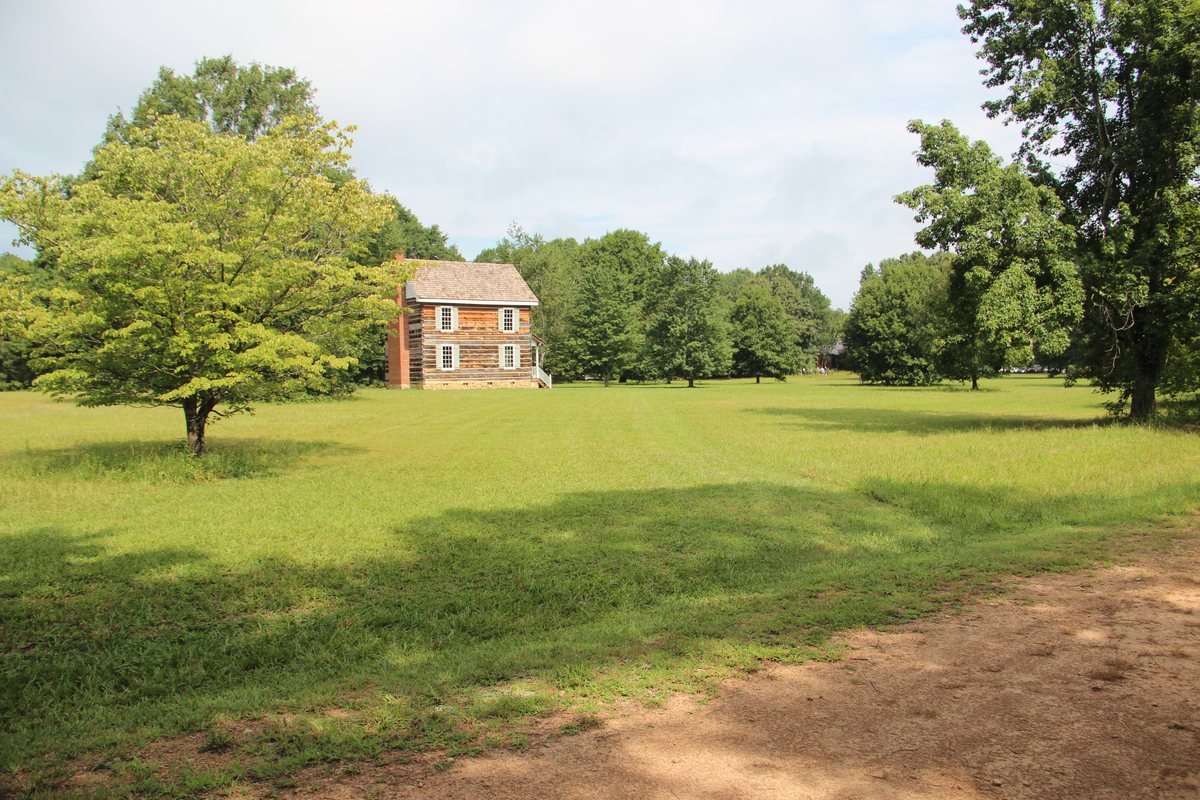
Photo: Thomson200, CC0, via Wikimedia Commons
New Echota was the capital of the Cherokee Nation. In 1825 the Cherokee national legislature established its capital here, at the headwaters of the Oostanaula River near present-day Calhoun. In just over a decade it saw the first American Indian language newspaper office, a case that went to the U.S. Supreme Court, and the signing of the treaty that led to the Trail of Tears; Cherokee removal officially began here. Today it is a state historic site with 12 original and reconstructed buildings.
- Address1211 Chatsworth Highway NE, Calhoun, GA 30701
- HoursTuesday to Saturday 9 a.m. to 5 p.m.; Sunday 1 to 5 p.m. (closed Sundays December through March)
- Admission$8 adults, $6 seniors 62+, $6 ages 6 to 17, plus tax
- Phone706-624-1321
Why New Echota Matters
The Cherokee built New Echota as a planned capital with a council house, a supreme court and a print shop. The print shop produced a newspaper in both English and Cherokee, using the syllabary created by Sequoyah. Missionary Samuel Worcester lived here, and his arrest by the state of Georgia led to the U.S. Supreme Court case Worcester v. Georgia, which ruled in the Cherokees’ favor. Georgia and the federal government ignored it.
In 1835 a small group of Cherokee signed the Treaty of New Echota here, giving up the Nation’s land east of the Mississippi River without the approval of its government. The treaty became the legal basis for the forced removal of the Cherokee people in 1838, known as the Trail of Tears. New Echota is where that removal officially began.
What to See
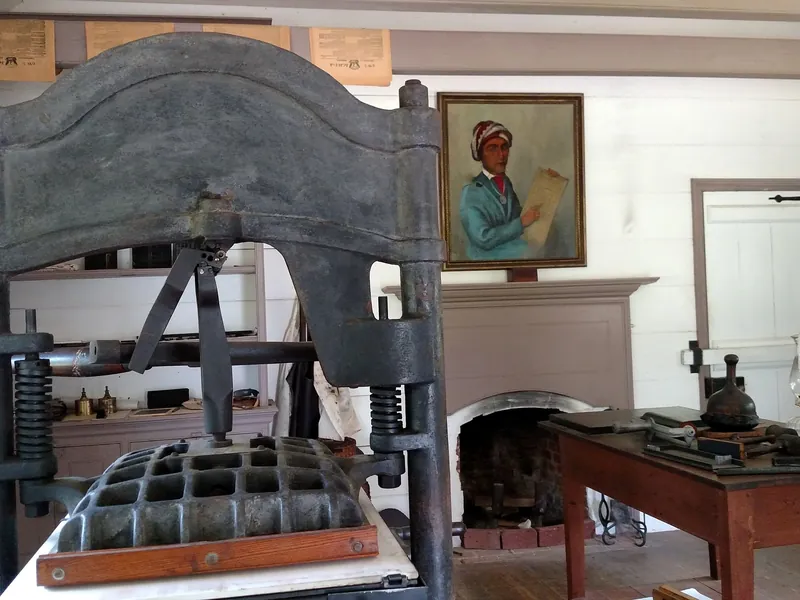 Print ShopWhere the Cherokee newspaper was printed
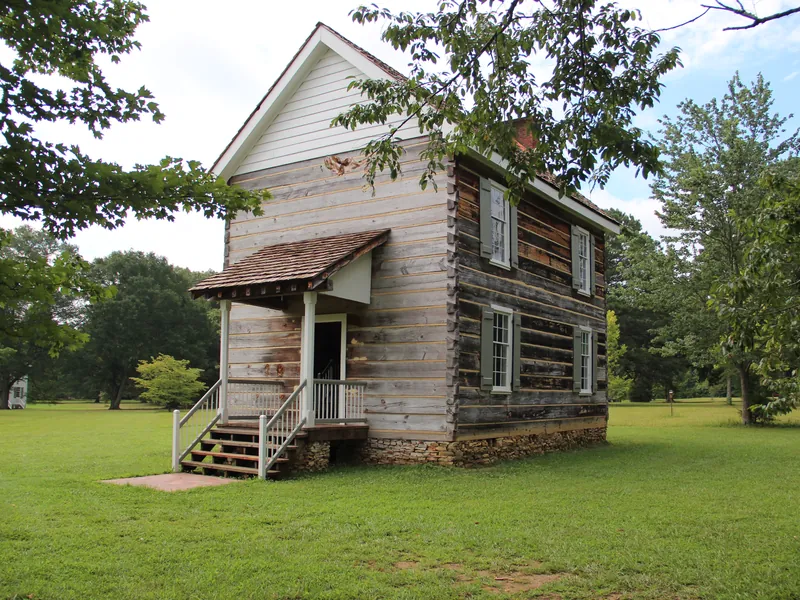 Council HouseSeat of the Cherokee legislature
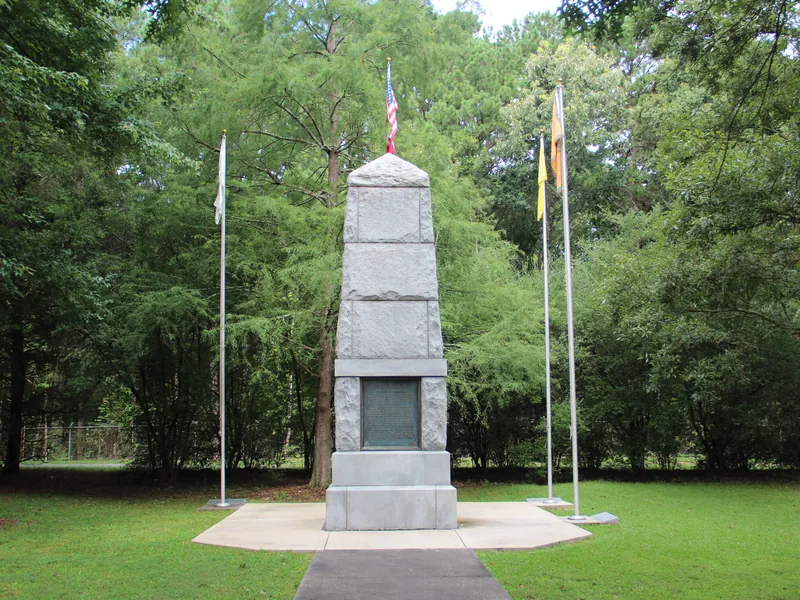 Cherokee MonumentHonoring the Cherokee Nation
Photos via Wikimedia Commons: National Trails Office (US National Park Service), public domain; Thomson200, CC0; Thomson200, CC0.
Visitor center and film
Start with the exhibits and the 17-minute film, which explains the capital and the removal.
Original and reconstructed buildings
Walk among 12 buildings, including the Council House, the Supreme Court building, the Print Shop, Samuel Worcester’s house and an 1805 store. Buildings and grounds close at 4:45 p.m.
Nature trail
A 1.5-mile trail loops through the woods around the site.
Group tours
Group rates and guided tours are available with advance notice.
Plan a Visit
New Echota is about 71 miles northwest of Atlanta, roughly 1 hour 20 minutes without traffic, just east of I-75 near Calhoun. Allow one to two hours. It is closed on Thanksgiving, Christmas and New Year’s Day. The site takes the Historic Site Pass, not the state parks ParkPass; see our ParkPass guide. Nearby, the Chief Vann House in Chatsworth and the Etowah Indian Mounds in Cartersville make a full day of Native American history, and Rome’s Chieftains Museum, home of Cherokee leader Major Ridge, is about 40 minutes away.
Common Questions
What happened at New Echota?
It was the capital of the Cherokee Nation from 1825, home to a Cherokee-language newspaper and the place where the 1835 Treaty of New Echota was signed. The treaty led to the Trail of Tears, and removal officially began here.
How much does it cost to visit New Echota?
Admission is $8 for adults, $6 for seniors 62 and older and $6 for ages 6 to 17, plus tax.
Is New Echota open on Sundays?
Yes, from 1 to 5 p.m., except December through March, when it is closed on Sundays.
Sources we checked
Facts on this page were checked against official sources. Hours and fees change, so confirm before you go:
- Georgia State Parks: New Echota: hours, admission, buildings, film, trail and history
Spot something out of date? Email Contact@n-georgia.com and we’ll check it against the official source. Read how we research our guides.