|
|
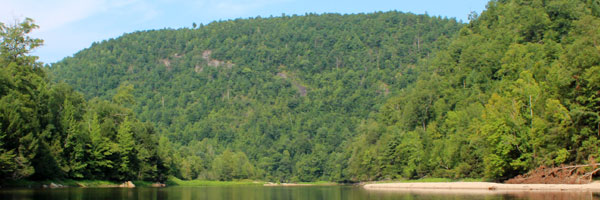
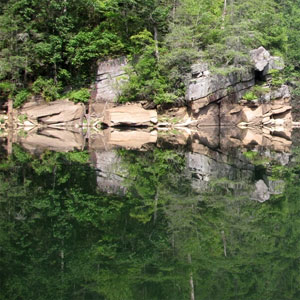
Lake Tugalo, near Tallulah Falls, is a 597-acre reservoir with 18 miles of shoreline. It is created by the Tallulah and Chattooga Rivers. Visitors to the lake can enjoy boating and fishing. Lake Tugalo, with no development, remains one of the most serene lakes in the state.
Owned and operated by the Georgia Power Company, Tugalo is on the South Carolina border near Clayton. Outboard motors are restricted to 25 horsepower.
Angling prospects are compiled by fisheries biologists and are based on sampling efforts of the Georgia Dept. of Natural Resources (DNR), knowledge of past fishing trends, angling experience and information provided by anglers and marina owners.
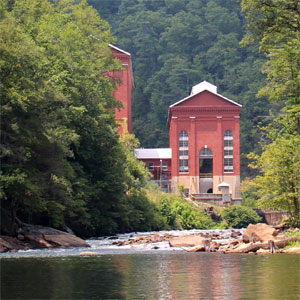
Tallulah Point - This very scenic overlook affords views of Lake Tugalo and Tugalo Dam. Also, especially intriguing to history and engineering buffs, the Tallulah powerhouse can be seen, along with dramatic views of the incline rail car and penstocks that descend from the park area to the powerhouse in the gorge below. The park contains parking and two picnic pavilions and is located conveniently off of U.S. Highway 441.
Tugalo Boat Ramp - This access area is located on the Chattooga River side of the lake in South Carolina. Several whitewater rafting operations use this spot as their take-out point. There is a portion of the shoreline that is designed for kayak/canoe/raft access. Additionally, there is a standard boat ramp. Other amenities include restrooms, a parking area with ample room for vehicles with trailers, and a turnaround.
Amenities: Boat ramp, Parking, Restrooms and Accessibility for mobility-impaired. |
|
| Best Fishing Bets are Largemouth Bass, Walleye, Spotted Bass, White Bass, Bluegill, Redbreast Sunfish, and Redear Sunfish |
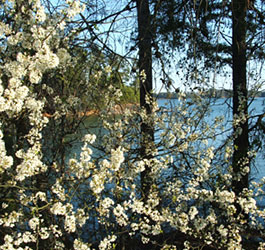 Largemouth Bass - Surveys indicate that largemouth bass in the 1 to 2-pound size range are abundant in Lake Tugalo.
Technique - From December through March, largemouth bass wedge themselves among the deeper branches of downed trees. Pig-n-jig combinations and other slow moving baits are effective this time of year. During the spawning period (April and May), cast soft plastic baits like flukes, trick worms and curly tail grubs around visible structure in the small coves and pockets that dot the shoreline. When water temperatures rise in the summer months, look for quality-sized fish in the cooler headwater areas of the lake.
Bouncing crayfish imitations along the bottom is an effective approach for bass in these rocky, shallow, swift water areas. Blueback herring lures, live crayfish, nightcrawlers and minnows also are effective in the headwaters. The fall transition pushes bass into the deeper areas of downed trees, especially on the upper end of the lake. Shad-imitating crankbaits, soft plastics and jigs are best bets in the fall. Anglers should also keep a watchful eye for surface feeding fish in the upper reaches of the lake and cast toward breaking fish with crankbaits and surface plugs.
Target - The shoreline is very steep, undeveloped and saturated with downed trees, which provide a haven for largemouth bass most of the year. Largemouth bass gorge on blueback herring during the early fall months and anglers should focus their efforts on the upper reaches of each river arm and fish around the deep water edges of blown down trees. The Chattooga River arm in the vicinity of South Carolina is one of the best places to fish for bass in both the spring and fall. The upstream headwater areas on both river arms are the best places to target bass in the summer. |
|
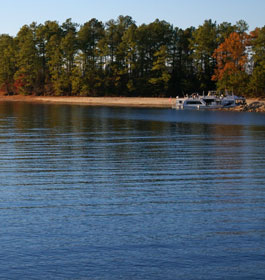 Walleye - Annual stocking of walleye in Lake Tugalo supports an abundant and popular walleye fishery. Anglers typically catch fish from one to three pounds, but walleye over 8 pounds have been caught. State record-class fish also are available. The dominant prey of walleye in Lake Tugalo is blueback herring. Live herring or artificial lures that mimic herring are the most effective baits to attract walleye anytime of the year. Walleye - Annual stocking of walleye in Lake Tugalo supports an abundant and popular walleye fishery. Anglers typically catch fish from one to three pounds, but walleye over 8 pounds have been caught. State record-class fish also are available. The dominant prey of walleye in Lake Tugalo is blueback herring. Live herring or artificial lures that mimic herring are the most effective baits to attract walleye anytime of the year.
Technique - Fishing access to key target areas is reachable only by boat on this remote lake. In mid-March, walleye congregate in the flowing waters of the Tallulah River below the Tallulah Falls power plant – cast floating Rapalas or nightcrawlers on a jig head at night into the flowing waters below the power plant. Use a slow but steady retrieve and be prepared for gentle resistance on the line, which indicates a strike.
In April, move to the Chattooga River arm and fish the area where the river pours into the lake. Fish nightcrawlers or curly tail grubs during the day or night on the bottom. The heat of summer creates a different pattern for walleye. Rising water temperatures force walleye to migrate to the lower end of the Chattooga River arm in the vicinity of the dam where they congregate at depths of 40-60 feet. Fish on the bottom along the points in the target depth range with nightcrawlers or minnows on a jig-head. In the fall months, walleye move into shallow water in the evenings to feed on bluegill, yellow perch and blueback herring. Nightcrawlers, minnows and shad-imitating lures are effective this time of year. Walleye have a very light bite, so anglers new to walleye fishing should remain alert to slight movements in the line, which may indicate a strike.
Target - During March, target the area below the Tallulah Gorge power plant on the Tallulah River arm. In April, target the river section of the Chattooga River arm. In the summer months, fish the points on the lower lake on the Chattooga River arm at depths of 40 to 60-feet. Fish the same areas in the fall but in more shallow water. |
|
 White Catfish - Catfishing is popular among local anglers who fish on Tugalo. White catfish that average 2 pounds in size are abundant in the Chattooga River arm. White Catfish - Catfishing is popular among local anglers who fish on Tugalo. White catfish that average 2 pounds in size are abundant in the Chattooga River arm.
Technique - Catfishing techniques involve simple baits and simple tackle. Worms, liver, small bream and artificial catfish mixtures are the most popular baits. Impale preferred bait on a number six size hook up to a 1/0 size hook, attach a few split shots onto the line and fish on the bottom along the main channel banks at depths ranging from 20-40 feet.
Target - The best time to fish for Tugalo’s white cats is on a summer afternoon when power is being generated. The gentle current through the reservoir created by power generation seems to trigger a feeding frenzy in the fish. Surveys indicated that the highest concentrations of white catfish are found in the vicinity of the South Carolina boat ramp. Target the points on the Georgia side, especially in the sharp bends upstream of the boat ramp. During the summer, bank anglers catch catfish from the South Carolina boat ramp. |
|
Spotted Bass - These fish are now present in Lake Tugalo in measurable numbers. Spotted bass are more abundant in the Tallulah River arm of the lake.
Technique - Spotted bass will roam a wide area in search of their favorite food, which is blueback herring. White-bodied soft plastics or hard baits that imitate herring will likely attract the attention of a hungry spotted bass on the prowl.
Target - Spotted bass are more abundant in the Tallulah River arm of the lake but are not well established on the Chattooga River arm. Anglers who want to target spotted bass are advised to start in the mid-section of the Tallulah River arm and fish toward the upper reaches of the gorge. Spotted bass orient to points and areas with large rocks. During the fall months, spots can be seen feeding on blueback herring over open water. |
|
White Bass - White bass occur in Lake Tugalo in relatively low numbers. White bass weighing up to 2 lb can be caught during their spring migration into the headwaters of the Chattooga River. October provides another window of opportunity to catch white bass when they are feeding on small blueback herring at the surface. Fishing is best at dawn and dusk in the upper half of the Chattooga River arm.
Technique - During the spring months, white bass will readily take small, in-line spinner baits like a Mepps Spinner or Rooster Tail, as well as small curly-tailed grubs in white, yellow or chartreuse on a light-weight jig head. Small topwater plugs will generate some strikes during the fall months when white bass are feeding on schools of small herring at the surface.
Target white bass in the upper portion of the Chattooga River arm. Start fishing where the river narrows down. Continue fishing upstream as far as motor boat access is possible. In the fall, look for breaking fish in the narrow section of the lake on the upper Chattooga River arm. |
|
Bream - Bluegill, redbreast sunfish, and redear sunfish (shellcrackers) are plentiful in Lake Tugalo. Redbreast and bluegill in the 6-inch and 1/4 lb range are very common around downed trees and stream outlets in the upper half of the lake. Redear sunfish are less abundant, but trophies weighing up to 3 lb are caught each year along the rocky banks near the South Carolina boat ramp.
Technique - Crickets and small spinners are effective baits for redbreast and bluegill. Cast around shallow water structure that is located in the small pockets and backs of coves. Fishing with red wigglers on slightly deeper rocky bottoms on the main shoreline is a more effective approach for targeting trophy shellcrackers.
Target - Fallen trees are abundant along the rugged, undeveloped shoreline of Lake Tugalo. The submerged tree trunks and branches provide a perfect hideout for bream that should be targeted by bream anglers. In addition, good numbers of bream reside in the many small creek mouths that drain into the lake. |
| Additional Info |
 Because of Lake Tugalo’s rugged access roads, vehicles with four-wheel drive that trailer small boats less than 16 fee long are strongly recommended. Boating access on the Georgia side of the lake is available through Tallulah Gorge State Park, which is located off Hwy. 441 in Tallulah Falls, GA. Because of Lake Tugalo’s rugged access roads, vehicles with four-wheel drive that trailer small boats less than 16 fee long are strongly recommended. Boating access on the Georgia side of the lake is available through Tallulah Gorge State Park, which is located off Hwy. 441 in Tallulah Falls, GA.
Lake Tugalo is an excellent destination for those who fish from kayaks or small boats.
Boating access on the Georgia side of the lake is available through Tallulah Gorge State Park, which is located off Hwy. 441 in Tallulah Falls, Ga. Easier access to the lake is available at the South Carolina boat ramp. Directions to the South Carolina ramp are as follows: From Hwy. 441 in Clayton, Ga., turn east onto Hwy. 76. After crossing the Chattooga River Bridge into South Carolina, travel about three miles and turn right onto Orchard Road. At the stop sign, turn right onto Battle Creek Road. At the fork in the road, bear right. After passing Damascus Church, turn right onto the gravel road. This long, winding gravel road will lead to the boat ramp, which becomes paved and very steep as you approach the parking area.
Lake Tugalo has a 25 hp motor restriction.
Free admission and parking. You can also fish off the banks for free. However, there is a $2 fee for using the boat ramp.
Contact Georgia Power Company at 706-782-4014 |
|
|


Print a NE GA Mountains Travel Region Map
Visit:

Georgia Lakes
More GA Fishing Lakes
Georgia Rivers & Map
GA Lakes & Rivers Map
Water Safety
|